Tag: nonfiction (Page 1 of 2)

Book review – Songs That Changed the World, by Andrew Clarke

Title: Songs that Changed the World: Music of Resistance and Transformation

Author: Andrew Clarke

Publisher: Gelding Street Press; RRP: $39.99

Reviewed by: Jason Nahrung, Ballarat Writers Inc. Book Review Group

There are 42 songs in this collection, the number apparently a nod to Douglas Adams’ famed meaning of life, and appropriately so: as the author notes, these tunes have impacted lives and taken on lives of their own.

 Melbourne-based Andrew Clarke, who has written more than 30 books, with this his third for Gelding Street Press, whittled his selection from a hundred, looking for songs that ‘shifted thinking, sparked action, or gave people a voice they didn’t know they had’.

The list starts with ‘Strange Fruit’, by Billie Holiday (1939), and ends with Sooking’s ‘La Liberte’, an Algerian/French protest song from 2019. A variety of musical styles and political and social movements are included. ‘Y.M.C.A.’ – gay pride, with a sly wink to those who didn’t quite get it, and later, Lady Gaga’s ‘Born This Way’, ‘a personal anthem so many in the LGBTQ+ community could relate to’. Helen Reddy and Loretta Lynn, stepping up for feminism; Joni Mtchell for environmentalism. Johnny Cash, Clarke argues, kicked open Nashville’s door to let politics into country music.

To his credit, Clarke has reached further than the obvious must-have American offerings (Pete Seeger, Sam Cooke, Bob Dylan) to highlight songs from Rwanda, Italy, Japan and more that have become the themes of popular movements.

As any magazine editor knows, a list is good fodder for a chinwag, not for just what’s in but what’s out. I won’t buy into that, but Clarke has left room for some watercooler discussion by spreading the idea of impactful songs beyond that of blatant protest. He labels ‘Panama’ by Van Halen the most unusual inclusion, an example of music used as ‘psychological torture, a sharp contrast to its traditional role as a unifying cultural force’.

He notes how Bruce Springsteen’s ‘Born in the USA’ and Creedence Clearwater Revival’s ‘Fortunate Son’ have been co-opted by politics that clearly haven’t paid attention to the lyrics, how the localised subject of songs such as Midnight Oil’s ‘Beds Are Burning’ can find fresh meaning elsewhere where the struggle remains the same.

Nena gets a (red) balloon for Cold War angst (with an interesting comparison of the original German versus the English version), the Beatles and Elvis win spots by popular vote, Band Aid for global achievement. There’s the occasional double dip, notably comparing the approach/synergy of headliner U2’s ‘Sunday Bloody Sunday’ with the Cranberries’ ‘Zombie’ 11 years later (similarly responding to an outrage in Northern Ireland).

A strength is the background to the music: perhaps something of their genesis, how they ruffled feathers, shook up the industry (Triple J earns a mention for its championing of N.W.A. when no other radio station would), became inspirational even if by accident.

The book itself is a glossy production making the most of its record motif, Clarke’s text beefed up with images of the artists and acts of protest. Which is where a couple of reservations put a scratch in the vinyl.

While the images have their sources acknowledged, it wouldn’t have hurt to have a few captions rather than trust to common knowledge or intuitive leap based on the names dropped in the text. Why is Cash pictured with Ray Charles? Is that Joan Baez giving Seeger’s ‘We Shall Overcome’ fresh air in a live performance?

Hear all about Songs that Changed the World

@ Channel 9’s Extra

The text also seems to get caught in a groove at times – the Beatles’ wit, charm and style are remarked upon twice on the same page, and twice we are told ‘Born in the USA’ was a Trojan horse – and sometimes the information feels like duplication: in the case of the comparison of the Sex Pistols to Nirvana (explosion/fallout, fuse/flare), quite literally.

That interplay of the songs, when done with restraint, is another strength, with Clarke noting how musicians respond to and build on those who have gone before: ‘Respect’ (Aretha Franklin) to ‘Love Child’ (Diana Ross & the Supremes) to ‘I Am Woman’ (Reddy).

Clarke has reached out to cover a variety of nations and genres to provide a list where Marvin Gaye and Bob Marley rub shoulders with Public Enemy and Green Day, providing a useful primer as well as a conversation starter.

‘Sometimes,’ Clarke writes, ‘we don’t know what we need until someone puts it in lyrics.’ And that, as events in the United States continue to demonstrate, won’t change any time soon.

Review copy provided

Book review – The ADHD Field Guide for Adults, by Cate Osborn and Erik Gude

Title: The ADHD Field Guide For Adults

Authors: Cate Osborn & Erik Gude with Rennie Dyball

Publisher: Monoray/Hachette, 2026; RRP: $34.99

Review by: Frank Thompson, Ballarat Writers Inc. book review group

Cate Osborn and Erik Gude are writers and educators. They are products of the internet age. Osborn is an author, speaker, Tik Toker, actor, pod cast host, sex educator, and mental health and disability advocate. She is based in Atlanta, Georgia. Gude is known for co-hosting the podcast “Catie and Erik’s Infinite Quest” and for his engaging content on platforms such as TikTok.

Rennie Dyball is a USA Today bestselling author and ghostwriter and editor.

Despite the best attempts of Gude, Osborn and Dyball to bring order to this project, there is clearly a lot of chaos. Though there is a method to the madness. Right at the beginning they explain how to read the book. It is not a book that needs to be read from start to finish; it can be, but also it can be dipped into, flipped through and bits chosen at random. Key information is presented in bite-sized pieces making it easy to grasp. Over the years I have discussed ADHD at length with various people, including psychologists, and I think this book captures the spirit of ADHD and I agree with the importance of building coping mechanisms. 

A lot of time is spent reinforcing the idea that because you don’t appear to fit the normal behaviour patterns of society it is alright, you are okay.  I find this kind of language almost self-defeating, as it highlights difference. But for some people these statements will be reassuring. The book is trying to cover a very broad spectrum of readers. The authors hint at the challenge this presented for them.  There are sections covering ADHD and co-morbidities. I found these enlightening.

Listen to an interview with Osborn and Gude

@ Hacking Your ADHD

A key takeaway from the book is the need to work out how to cope and function in society to participate in all the usual things. Things like relationships, work/career, education, even sex. You do not have be an outsider. It is not about trying harder. Rather, you need to find what works for you.  And sometimes medication helps, as does tolerance from others. It should be about the outcome, not how it is achieved.

Gude and Osborn have not tried to produce a book on the psychology of ADHD, though they inevitably had to provide some background in places and they do draw on formal expertise where necessary. The book is about the experience of living with ADHD in its many variations. It is based on their own lives and on comments from others.

This is an informative book for anyone dealing with ADHD or with people diagnosed as having ADHD. However, on the downside, there are large slabs of the book which I think are culturally and jurisdictional dependant. For example, the advice on dealing with the health system is irrelevant to anyone outside of America.

Overall, I found it an interesting and useful read.

Review copy provided by the publisher.

Book review: How Not to Become a Grumpy Old Bugger, by Geoff Hutchison

Title: How Not to Become a Grumpy Old Bugger – A Bloke’s Guide to Living a Better Life

Author: Geoff Hutchison

Publisher: Affirm Press, 2025; RRP: $36.99

Review by: Frank Thompson, Ballarat Writers Inc. book review group

Geoff Hutchison is a retired ABC journalist, and broadcaster. At one time he was associated with the 7.30 Report and was a Foreign Correspondent reporter.

This book is about men, well, blokes, mostly older ones. Despite this, it is not exclusively for men. Wives, partners, family, and friends or anyone who knows someone with a grumpy disposition would find this book a guide to greater understanding. It begs the question, is there an opening for a book about grumpiness in women?

Geoff has written this book in a conversational, interviewer, broadcasting style. Initially, I found this a little off-putting. However, full marks for doing something different. I didn’t see any point in being grumpy about it, and eventually I warmed to it. Which I guess is what a lot of the book  is about.

The first chapter of the book asks if men are in crisis, which is also the title of the chapter. Geoff starts with a story about a time when he asked his father if he was happy and got the reply, “No, not really”.  The implication is that his father’s stoic unhappiness is intrinsically linked to grumpiness.

What follows is a discussion highlighting the move away from seeing men as the solitary breadwinners, defenders, and patriarchs. A move many men find difficult, and a major cause of grumpiness. However, change is inevitable; society and societal values are constantly shifting.

Geoff uses his own life experiences and relationships as starting points for various subtopics. He also draws on contacts from his ABC days to provide subject matter expertise. This is often presented as summarised/edited conversations. Contributors include author of Boys to Men and men’s counsellor Maggie Dent, Nick Bruining on money and finances, and for the delicate topic of sex, he consulted Dr Michael, a seventy-something specialist in male functionality.

The book does not include a list of contributors/interviewees. This is possibly because some wished to remain anonymous. The GPs he talked to about men visiting their doctors chose to use nom de plumes. However, at the end of the book there is a list of resources for anyone needing to talk to someone about their mental health or wellbeing.

Listen to Geoff Atchison introduce How Not to Become a Grumpy Old Bugger

@ Google Play Books

One of his sons gets a chapter to himself, giving a perspective from the younger generation.

Male violence, mostly violence towards women, gets suitable coverage. This is a complex topic, more than a book like this can fully explore. He is explicit about there being no excuse for violence against women. However, he does not let the subject overshadow the rest of the book.

Many of the themes and topics are familiar, for example, lack of purpose after retirement, many men’s reluctance to talk to a doctor, and men’s inability to share emotions and suffer in silence – except they aren’t always silent.  

I thought key messages in this book included: men need to learn to participate more in all aspects of life and living, participation is a two-way process, men should engage with partners and family more constructively, as well as with mates and the community, and be tolerant of change (they might find they like it).

Geoff is light-hearted in his rendering of the issues affecting men, but always respectful and tactful. Hopefully this will encourage those who need this book the most to read it.

Book review — Behind the Screens, by Niraj Lal

Title: Behind the Screens: How the internet works and how to make it work for you

Author: Niraj Lal; illustrated by Aśka

Publisher: University of Queensland Press, 2026; RRP:  $19.99

Reviewed by Rhonda Cotsell, Ballarat Writers Inc. Book Review Group

This excellent little book provides basic information about everything screen based – phone and computer – aimed primarily for children in the 8-14 age group. It also serves as a support guide for  teachers and for adult family members or carers at home looking for a guide in a format that is easy to navigate or to read with, or give to, children under their care.

I am particularly impressed not only with its scope and layout but also how it navigates a path between content that shares what there is to enjoy and gain from the internet and also what to be wary of. There is also generous space given to the non-internet time, and what each provides to enrich a child’s life and also what it lacks, and how they work together.

I found it easy to read as both an adult interested in the subject and as a parent already aware of the ups and downs of our relationship with our children regarding this subject.

Now, would I buy this for my grandson? Yes, despite the fact I can see his eyes rolling in disbelief and a despairing ‘Naaaaaann!’ at my presumption, given our shared familiarity with the significant deficits in my knowledge of all things IT, followed by the lofty observation that anyway he can find out all that on the internet (I find blackmail can work at this point; teachers, you’re on your own).

And as a nit picky reviewer thinking about how does it fulfil the promise of its title: Is it up-to-date? How thorough is its coverage? How easy is it to read given its reader/s and does the language bridge the gap between adult and child? How does it ‘sound’ read or spoken and does it inform or does it proselytise or attempt to inculcate? Is it grammatically correct, and especially, who wrote it and can they be trusted?

He can. The author’s background is one rich in science and involvement with children generally. Lal’s qualifications are impressive. He is an ANU Visiting Fellow and host of the ABC kids’ podcast Imagine This. He has a PhD in physics and has appeared on Play School and Catalyst. His awards include a 2021 Celestino Eureka Prize for Promoting Understanding of Science and a 2022 Royal Societies of Australia and New Zealand Piasecki Prize for Outstanding Writing on Social Change. He is also Dad to three children.

Listen to an interview with Dr Niral Lal about internet literacy

@ ABC Radio National

A minor quibble is the lack of an index, and a Contents list of chapter headings that, while catchy, provided little guidance to the information covered in each section – something an index would have solved. However,  the book is only 116 pages and the layout is extremely well designed, making it easy to pick up at a glance what each section contains from paragraph to section level.

The size of the book and layout is for me a significant success re accessibility of information and physical usability. Good for small hands and large, and portable. A lot has been accomplished by skilful use of varying fonts, text boxes, generous spacing for the eye to jump from one piece of information to another. Key words are bolded within concise paragraphs so skimming is effortless. This makes it easy to both locate a particular subject or choose whether to read that section or not. The colour scheme is a pleasant and consistent use of varying shades of blue – no use of the bright and grabby to disconcert. The illustrations are cartoon like. These and short, concise blocks of text break up the larger paragraphs, emphasising important points and allowing the reader to read quickly, picking up important information as an alternative to the slower word-by-word, sentence-by-sentence, but also repeating main points. This is especially good given the different levels of knowledge each reader will have, and level of concentration.

The illustrator Aśka is an award-winning graphic novelist and an ex-quantum physicist passionate about visual literacy and teaching people how to ‘write with pictures’.

Given its aim, it is simultaneously easy to read and engaging. There is an inbuilt and comfortable logical flow from one section to the next. For example,  Chapter 7 Being Healthy with Tech covers bullying and the importance of non-screen time, delves into whole-family involvement and, in a section on screen health, being aware of mood changes. Chapter 8 What To Believe uses the term spidey sense, a lovely word which adults might miss but childrenwill enjoy, to refer to that innocuous suspicion all of us feel looking at certain sites. It then talks about recognising legitimate information, which leads naturally into different opinions and algorithms, its incidental AI equivalent, looking at the pluses and minuses, describes user behaviour and tracking, then defines in simple terms the science used before going into fake news and how to identify it, who benefits from it, and the faking of proof. It also provides hints about trusting yourself – your spidey sense. All of which covers a lot of potentially boring ground for children.

Everything about it physically and in design allows for a variety of usage scenarios – classroom, small-group work, at home one-on-one with parent/carer and child, and solo reading and rereading. Also, though definitely not its aim, I – an older and less confident adult – read it from cover to cover, finding it helpful for understanding some terms, colloquialisms and context, and for checking I am on track with my own screen time.

Overall, an excellent work doing what all good books at the most basic level do best, which is to make its reader emerge knowing more than they did before.

Review copy provided by the publisher

Book review – The Secrets of Anzac Ridge: In Flanders Fields, by Patricia Skehan

Title: The Secrets of Anzac Ridge: In Flanders Fields – an extraordinary account of life in and out of the trenches.

Author: Patricia Skehan

Publisher: Hachette Australia, 2025; RRP: $34.99

Reviewed by: Rhonda Cotsell, Ballarat Writers Inc. book review group

Despite what its title suggests, this work is centred on a small town called Steenwerck, located near the site of the Battle of Fromelles. Steenwerck was the base for the 2nd Australian Casualty Clearing Station, a military hospital which played a major role in receiving and treating casualties from  Fromelles and transporting them to the nearby railway for evacuation from the front. (Anzac Ridge was an important site in the Third Battle of Ypres, casualties from which would also have passed through the Steenwerck clearing station.) A feature of the area was the duckboards put down to make walkways over the muddy ground, an innovation my grandfather, who served as a soldier and stretcher bearer, would have been familiar with.

Patricia Skehan, author of The Secrets of Anzac Ridge: In Flanders Fields, was a founding executive member of the City of Canada Bay Heritage Society, who has toured Australia speaking and lecturing for organisations such as Probus and U3A, VIEW clubs and historical societies.

The story of The Secrets of Anzac Ridge: In Flanders Fields draws on a compilation of raw material extracted from Trove, the National Library of Australia (NLA) newspaper database, which contains digitised newspapers and newsletters. Other material is sourced from family-held letters, diaries, and the NLA catalogue. Much use is also made of  material from the diary of General Sir John Monash, and another held by the family of a young enlistee, James (Jim) Armitage.

The material has been organised into sections grouping specific themes, colourfully headed such as Shattered Humanity, Strong Language, Cobbers, Mademoiselle From Armentieres, and more. Because it’s not organised chronologically, it presents as a series of short and highly colourful,  always emotionally charged, snapshots of that very much larger and vastly more complex field. Hearing these voices rising out of this period of history is effective, but highlighting certain aspects while showing them out of that larger context, hence omitting much, and connected only by what the author chooses to say about them, risks skewing the reader’s awareness of the events.

Similarly, reviewers are susceptible to bias when they review a book. It’s hard to avoid sometimes. As this reviewer, I acknowledge my bias from growing up hearing WW1 stories my grandfather, Angus McSwain, told my father. Angus was a private in artillery, fought in the trenches and was also a stretcher bearer, first at Gallipoli and later the Somme.

Medical orderlies at the 2nd Australian Casualty Clearing Station near Steenwerck moving patients over duckboard walkways (to avoid the muddy ground) using a two-tiered stretcher holder on wheels. The stretcher holder could run along railway tracks leading to the train (seen in the background), which pulled up right at the camp. Here the orderlies are changing direction at a turntable. Source: AWM

My father told me about seeing the strange whiteness of his father’s feet, a result of trench foot Angus suffered for the rest of his life, and showed me the word neurasthenia on his discharge papers. He told me Angus’s story about walking on duckboards across mud at the head of a line of men, a bomb falling, and looking behind to discover he was the only one left standing. One day while out rabbiting together, he asked his father innocently as a curious boy whether he had killed any Germans, and his father just wept silently all the way home. The shame he suffered from hurting Angus lasted till he died. 

Consequently, there were areas of The Secrets of Anzac Ridge that left me cold. Almost voyeuristic, the book reads as trapped in an unpleasant and unnatural excitement, like a closed bubble in time where emotions are huge and the events filtered by the author’s presence. There is also at times a strong sense of the author wanting to present a cheerful light that felt both invasive and manipulating. There is much about the Australian Digger spirit, their ‘good cheer and revelry’ despite dreadful suffering, and many extracts which seem to have little to do with what the title offered.

One extract the author chose to include really threw me. It is the author’s choice of material to give a picture of British Field Marshal Douglas Haig compared to that of Australian Brigadier General Harold ‘Pompey’ Elliott in relation to Fromelles and the Battle of the Somme. Haig responsible for the needless death of thousands, and Australians specifically, and the other, also aware, who had to send his men into it. Angus among them.

General Haig … what struck me more than anything when he came into the room was his firm, healthy appearance and his keen, but sympathetic, eyes. His skin was clear, and he looked what he was, a clean-living man of action … (p158)

This is followed by more of the same. No mention of the horrendous death toll and inevitability of defeat that his ‘action’ would result in, nor the fact that opinions about Haig are still disputed today.

There is little re Elliott, the strict disciplinarian devoted to his men first and foremost, who, when the order was made, as a professional soldier and leader of the Australian 5th Division, was forced to obey despite his fears.

 In Trove, I found mentions of Pompey’s role everywhere, for example, an article in a 2006 issue of Army about an exhibition at the Australian War Memorial cites curator Peter Burness:

“The 5th Division, the most recently arrived and the least prepared for battle … was put into the front line at Fromelles, resulting in 5500 casualties overnight and no ground gained at all,” Mr Burness said.

…

“Brig ‘Pompey’ Elliot [sic], one of the great fighting generals in the Australian Army, saw his brigade destroyed in front of his eyes,” Mr Burness said. “He greeted the survivors coming back off the battlefield with tears running down his face.”

Skehan’s only reference to the Australian leader is roughly three sentences, referring briefly to his popularity with his men, nothing about his role, and a brief comment re his postwar suicide, suggesting it due to an unnamed financial matter involving letting people down.

I located this unnamed financial matter in Trove – bad investments adding to his depression over feeling he had failed to provide for his family properly – along with an inquest report and an item quoting the sister-in-law and attending doctors referring to deep depression caused by wartime suffering, shell shock and the suffering of the men under his command, plus copious records referring to the sort of man he was and his role in Fromelles, and his ongoing work postwar protecting the rights of those men who made their way home.

Central Highlands readers may also find it interesting that Pompey Elliott was from the Victorian Wimmera town of West Charlton, attended Ballarat Grammar and began law studies at university before leaving to fight in the Boer War.

However, though playing a massive role in the Gallipoli landing, in this work he is as good as invisible, while Haig glows, and this is what the reader will be left with.

Easy to read and entertaining as it is, I therefore would strongly recommend readers make sure to follow up with other reading on the same topic.

Review copy provided by the publisher.

If anything in this article has disturbed you, please know that Lifeline is available 24/7 on 13 11 14 (https://www.lifeline.org.au/), as is Open Arms, assisting those in the armed services, veterans, and their families – 1800 011 046 (https://www.openarms.gov.au/)

Book review – One Day I’ll Remember This, by Helen Garner

Title: One Day I’ll Remember This: Diaries Volume II 1987-1995

Author: Helen Garner

Publisher: Text Publishing; 2022  

Review: Frank Thompson, Ballarat Writers Inc. Book Review Group

The name Garner came up recently in relation to a celloist at this year’s CresFest.  A friend suggested the celloist was probably Helen Garner’s daughter. And then went on to reminisce about life in inner Melbourne suburbs in the late sixties and early seventies, suggesting she knew people like the characters in Helen’s debut novel, Monkey Grip.

I vaguely remembered the name and must confess I have not read any of her actual works. With my curiosity piqued, I couldn’t resist the Helen Garner diary I spotted in a favourite bookshop. This review is mostly about that diary, which as it turns out is the middle volume of a three-volume set covering Helen’s life from 1978 to 1998*.

The three diaries are similar in layout, arranged chronologically, though the individual entries are not dated.  Various characters are represented by a single capital letter. A couple of notable people, such as fellow writer Elizabeth Jolley, are mentioned by name – is this name dropping? And some people, such as members of Helen’s family, are referenced by their relationship, e.g., ‘My Sister’ (which is confusing because I believe she has four sisters).  

The diaries are written as a series of slivers of Helen’s life, each presented separately. Not simple jottings or notes but vignettes – dreams observations, anecdotes, meetings and assignations, conversations had and overheard (two young lads talking on a tram) – all very personal and revealing.

At first the entries seem a random selection, with no context. The absence of a timeline accentuates this impression. Some entries are linked, dealing with the same topic and run through the three books – Helen’s relationship with V, for example. This thread goes from early meetings, to growing involvement, to marriage and finally to separation.  It gives the books a story with momentum.

Discussing Monkey Grip

@ The Wheeler Centre

While these diaries are revealing, I would not call them a warts-and-all disclosure, certainly not grubby, no bleeding hearts or character assassinations. One cannot help wondering if much editing and filleting was done to the original handwritten entries.  

I found the writing to be deceptively simple, everyday words exquisitely arranged, affording intimacy and familiarity. Perhaps why I’m using Helen and not Garner.

Diaries contain one’s innermost thoughts and observations, windows to the inner workings of one’s life. Perhaps, reading other people’s stirs the hidden voyeur in us. The opportunity to see what really goes on behind a public image. And these diaries are about Helen’s life, there is not a lot of talk about her writing: a few entries and snippets here and there. I guess writing for a writer is work, not life.

I enjoyed reading these diaries especially the middle one. Not just for what I learned about Helen but for what I learned about myself. And those lessons … well, you will have to wait and see if I publish my diaries.

* The others being Yellow Notebook: Diaries Volume I 1978-1987 and How to End a Story: Diaries Volume III 1995-1998

Book review — Rock and Tempest, by Patricia Collins

Title: Rock and Tempest: Surviving Cyclone Tracy and Its Aftermath
Author: Patricia Collins
Publisher: Hachette Australia, 2024; RRP $34.99

I chose this book because, like many, the news of Cyclone Tracy hitting Darwin early Christmas Day 1974 left an indelible memory, but I knew little of what followed. Rock and Tempest has been written by someone who was there. So, I looked forward to finding out more.

Despite its title, Rock and Tempest: Surviving Cyclone Tracy and Its Aftermath is mostly about the role played by the Royal Australian Navy (RAN), as experienced by Patricia Collins, who was there as a member of RAN’s non-combatant Women’s Royal Australian Naval Service (WRANS).

In some areas the reportage is like a diary, personal and revealing, but interspersed with recollection couched in the severe and exact language of the military. The shifts between are sometimes abrupt and the military language, dry and reliant, assumed insider knowledge that I occasionally found frustrating. Despite this, Rock and Tempest held me riveted to the end.

We meet the author huddling in a wardrobe, the safest place she could find as all hell breaks loose over and around her. The roaring wind force is so great that rain is horizontal, but when the fire alarms sound she obediently climbs out of the wardrobe to follow the correct procedure of reporting it to the duty quartermaster gunner. Despite the unlikeliness of fire being the main danger. Sprawling and crashing down a corridor, she makes the call, but when returning to the wardrobe, she is knocked off her feet and skids backwards down the hall – grabbing at the louvres that line the walls – propelled by the violent strength of the water cascading in.

At first these sudden shifts from unpleasant experiences to strictly following procedure were disorientating. But it worked, giving a human face to the RAN’s rigorous adherence to process, but also including instances elsewhere reflecting the freer, practical spirit of the human species that created them. Like not handing in unbroken bottles of various alcoholic substances around destroyed homes, instead putting them to use, substituting for the lack of debriefing, in the get-togethers with friends and family after long emotionally and physically exhausting days. The author’s inclusion of details like these act to humanise the factual, report-like information the author provides of her naval colleagues’ activities. Some rules need to be refocussed.

Naval acronyms are used liberally unfortunately, with no glossary to assist readers. There is also much detailed description of daily duties, equipment specifications, rules and procedures sometimes seeming only loosely relevant to Darwin and the cyclone, though very relevant to those whose work revolved around them.

Patricia Collins interviewed at the ABC about Cyclone Tracy

In the days that follow the storm, events are leavened by other small, chatty details about the RAN’s domestic, personal and social lives. Though unashamedly self-congratulatory at times, it reads as well-earned pride. People emerge as hardworking, and committed to rescue and protect but still as fleshed-out individuals rather than faceless figures whose only identity is the military force to which they belong.

Disappointingly there is less information about how Darwinian civilians experienced Cyclone Tracy and its aftermath. On reflection, however, that is inevitable. What the author experiences is shaped by her role as a Wran, which would affect how her hours and days were filled after the cyclone had passed, and also what she would recall.

Despite this, civilians are not entirely absent. She writes,

There is no doubt that that local police and medical personnel did a phenomenal job in desperately tragic and chaotic conditions … despite their own losses, they fronted up for duty day after day. Their work was shattering.

Read more about the RAN”s involvement in the events of Cyclone Tracy

Scattered throughout Rock and Tempest are other snapshot-like references to what Darwin civilians endured. Her words and what she notices are stark and dramatic, creating unforgettable images despite their brevity.

Details like an uncertain death total because bodies were dropped off at medical points without details being taken and only those identified being counted, the large number of ‘transients’ camped on Mindil Beach directly in the path of the cyclone’s approach, blood hosed down in a hospital room and running down stairs, divers finding sunken pleasure cruisers by following the sharks, people unable to find shelter cut to pieces by flying sheets of tin.

This against a shared background of RAN and townspeople alike suffering endless searing heat and the overwhelming stench of Christmas Day seafood rotting in freezers and refrigerators. And the deaths of their own.

The author also speaks of the lack of recognition for what both RAN and WRANS personnel suffered, and the suffering that continued afterwards in their lives.

One man, sent to rally the troops, told the author later:

…he had found the staff in a bad way, pointing to one man sitting in a dark corner, whimpering gently. The best efforts … were futile in easing the man’s broken spirit.

and later,

Many people who went through the cyclone reached the limits of their physical and emotional strength sooner or later. Darwin city recovered and went on to grow and thrive. Many people did not.

There is more of this and it is worth reading to get that fuller picture of things that happened outside public view once the initial aftermath was dealt with, while higher-ups up received accolades and medals. Another story in itself. Despite the disenchantment underlying the ending, however, Patricia Collins was rightfully proud in what she and those she worked beside accomplished. She was glad she was there.

Rock and Tempest is one of those rare books that will haunt the reader long after the last page. For me it’s the Wran struggling through flooding waters to report fire alarms to a duty officer because no matter how ridiculous sometimes, an ability to adhere to rules defines that particular type of people who make the difference between success and failure when our worlds break apart.

Reviewed by: Rhonda Cotsell

Ballarat Writers Book Review Group

Review copy provided by the publisher

Book review – My Efficient Electric Home Handbook, by Tim Forcey

Title: My Efficient Electric Home Handbook

Author: Tim Forcey

Publisher: Murdoch Books/Allen & Unwin, 2024;  RRP: $29.99

The Author

Tim Forcey is a home comfort and energy adviser, researcher and author. Tim grew up on a dairy farm before pursuing a career as a chemical engineer working around the globe in fossil fuels but left that industry after realising the climate crisis couldn’t wait for him to effect change from within. Following roles with government, the University of Melbourne, and not-for-profit organisations, Tim now thoroughly enjoys helping people make critical changes in their own homes.

The Book

As the front cover boldly states, this is a handbook for making your home energy efficient and electric. Given the rising energy costs, this title has got to be an attention getter. Indeed, for me, this book was an impulse buy. So, was it worth it?

In the introduction Tim outlines why we should aspire to live in an efficient electric home. Or as Tim says: this handbook shows how to stop burning stuff at home, whether that be fossil fuels such as gas or LPG, or even wood. His premise is that electrical options for heating, cooking and cooling are cheaper and more comfortable. Certainly, since I discovered induction cook tops (some time ago), I will never go back to gas for cooking.

Tim claims the key drivers for everything electric are money saved, a more comfortable home that is safer and healthier, and tackling the climate emergency. Even if you don’t agree with the last, the first three should be sufficiently motivating.

Part 1 of the book gives the reader an insight into Tim’s journey from son of a dairy farmer in America, through his employment in the petrochemical industry working for BHP in Melbourne, to an energy evangelist. There is also a summary of the evils of climate change, a little bit about Tim’s role as an energy adviser and some comments about the quality of Australian homes.

Tim spends the rest of the book talking about the opportunities for electrifying your home.

Tim Forcey interviewed for Australia’s Biggest Book Club

@ The Australia Institute

Tim’s writing style is clear, simple and easy to read. Much of it is based on Tim’s experience with his Melbourne residence, giving the book a personal feel. Tim also draws upon research and experience associated with the engineering of domestic energy consumption, and Melbourne University research.

There is a modest but adequate set of endnotes, and a good index is included.

I’m sure there would be other experts in this field who might argue with some of Tim’s opinions. A lot of the advice in this book is, I think, obvious, for example, eliminating draughts. However, I found most of the advice to be practical and achievable for the average household.

This is a great read for anyone setting out to tackle their home energy issues. Even if you are some ways down that path, it is still a good checklist.

This was the first time I saw a convincing statement of the benefits of reverse-cycle heat pump technology over ducted gas for home heating.  And considering my recent investment in heat pump technology, it was reassuring to see in My Efficient Electric Home Handbook evidence that my own unscientific observations are correct and therefore made the impulsivity of the book purchase worthwhile.

Reviewed by: Frank Thompson

Ballarat Writers Inc. Book Review Group

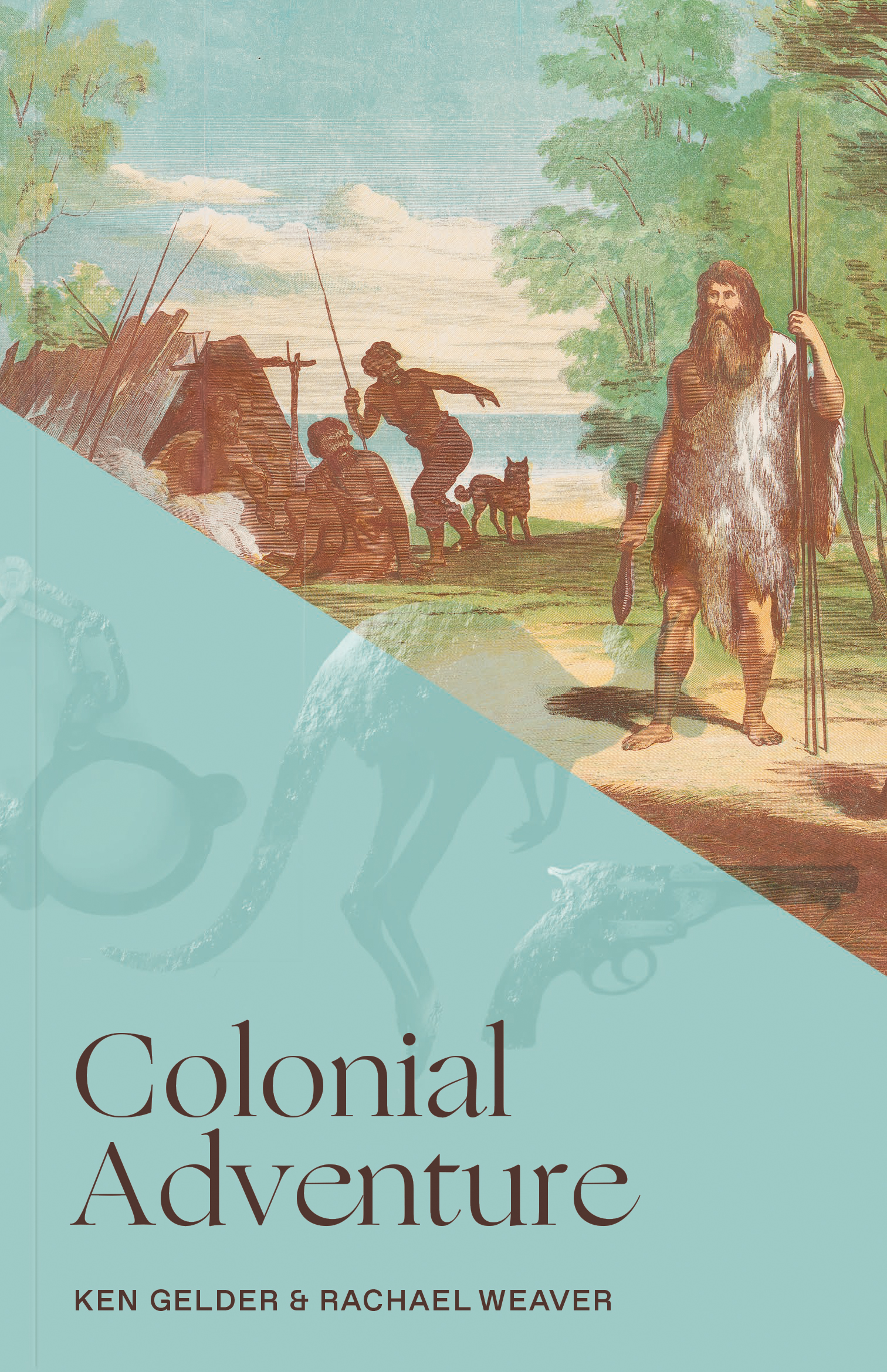
Book review – Colonial Adventure, by Ken Gelder and Rachael Weaver

Title: Colonial Adventure

Authors: Ken Gelder and Rachael Weaver

Publisher: Melbourne University Press, October 2024; RRP: $29.99

The term picaresque pops up a bit in Colonial Adventure, and similarly to the travelling adventurer of that particular style of yarn, our narrators here are passing through a series of locations as they lead a guided tour through the body of works exploring the colonial experience in pre-Federation Australia. Our guides here are Emeritus Professor of English at the University of Melbourne Ken Gelder and ARC Future Fellow at the University of Tasmania Rachael Weaver.

This is not Gelder and Weaver’s first expedition into this terrain, the pair having collaborated on three other titles in a similar vein, and their experience as academic researchers and collaborators provides a smooth, logically composed journey here. They keep the text accessible and kindly throw forwards and backwards to repeated references to help keep the reader up to speed without the flicking of pages.

There is a large body of work to cover – the end notes, bibliography and index run to about 60 of the 240 pages – and the authors do well to keep the tour moving across the most interesting or illustrative of examples, pausing in places to elaborate on the significant postcard moments such as the well-known William Buckley and Eliza Fraser. This pair feature in a chapter titled ‘Castaways and Cohabitants’, which delves into the presentation of their experience as dwellers with Aboriginal peoples as well as the aftermath of their experiences.

Not surprisingly given the book’s title, the ‘adventures’ here – whether journals, reportage/memoir, or fiction – are backgrounded in the way they reflect colonial thought and often the relationship between invader/occupier and First Nations people. The authors have gone to lengths to attempt to identify the names of Country on which events take place, thus acknowledging the diversity of First Nations cultures and the impact upon them. But the authors also note that ‘(c)olonial adventure was not always overtly in the service of empire’ and ‘could also transmit information about people and places never before seen; some of that information might even disturb the ideologies that colonisation relied on’.

The nationwide tour begins with explorers, with James Cook and William Dampier to the fore, and what is a foundational but fairly dry opening discussion on where such sanctioned escapades fall within the genre, before opening up to more exotic narratives of early encounters with New Holland. This is followed by four more chapters that trace the changing attitude to the land and its exploitation/occupation: ‘Transportation and Convict Adventures’, the previously mentioned ‘Castaway’, Bushrangers etc’, and ‘The Speculation of Colonisation’, which focuses on the planned settlement and opening up of the land as an economic endeavour. The latter takes in Lemurian fictions (based on lost or undiscovered civilisations), where First Nations peoples are again undermined by the ideal of a European or otherwise technologically advanced society occupying the inland of the country, with or without the fabled inland sea.

The idea of adventure is an element of discussion, wherein the picaresque style of story comes into play as a step in the evolution of the colonial experience: from explorers mapping the coastline to fictional and non-fictional roguish visitors enjoying outlandish adventures to brag about on their return home, to those here for the long haul, exploiting the natural resources in the hunt for wealth. The adventures extend to women and Aboriginal resistance fighters, too, and one of the interesting elements of these stories is how some bushrangers (both Black and white) occupied ‘liminal’ spaces in which they both opposed and supported the ruling power.

As mentioned, it’s a guide book, a starting place for researchers and the casually interested, a window seat offering an overview of the relationships between the new arrivals and the land and its people, revealing the mindset that justified terra nullius, murder and dispossession, and leaving the lingering sensation that these attitudes are not yet merely moments of history but still active currents at economic and socio-political levels.

Reviewed by: Jason Nahrung

Ballarat Writers Inc. Book Review Group

Review copy provided by the publisher

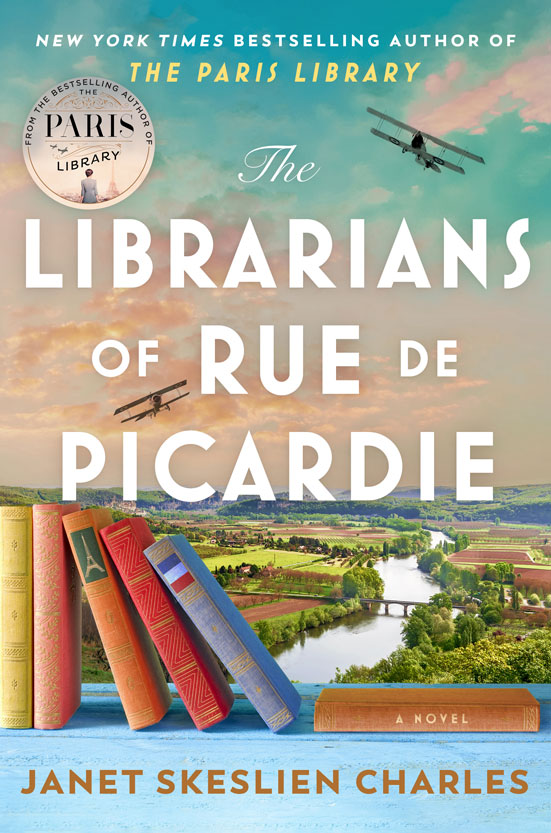
Book review — The Librarians of Rue de Picardie, by Janet Skeslien Charles

Title: The Librarians of Rue de Picardie

Author: Janet Skeslien Charles

Publisher: Headline Publishing Group/Hachette, 2024; RRP $32.99

It is 1918 and Jessie Carson, a young American children’s librarian, is seconded from the New York Public Library (NYPL) to set up a library service 20 miles from the Front in war-torn France.

She is part of a highly select group of women chosen by Anne Morgan, daughter of  multimillionaire Pierpont Morgan, and her friend physician Anne Murray Dike, founding members of the American Committee for Devastated France (also known as CARD), established in 1918. Its mission was to assist French citizens – men, women and children – left behind when the German army retreated, struggling to survive amid the human and physical wreckage of post-war regional France.

Jessie’s particular role was to establish a library service for children, delivering the escape and joy that books and stories can give to children in even the ugliest of circumstances. She had to adjust: turning ambulances into bookmobiles, conducting storytime sessions on blankets on bare ground, bringing book materials for parents as well. In doing so she also often, predictably, faced opposition from others who considered this to be unimportant, her labour needed for more practical tasks.

CARD also provided seeds and agricultural equipment to re-establish food crops,  and medical  assistance for the streams of wounded coming from the Front, and Jessie and her helpers also shared in these and many other tasks.

Anne Morgan’s silent film promoting CARD’s work in France

the findlay galleries

In another time and place, 1987 in the NYPL, library worker and aspiring writer Wendy Peterson is working in the Remembrances Department in the basement, photographing delicate old records to preserve them for the future. One of her tasks is to make photocopies of a box of newsletters written by CARD and it is there she finds Jessie.

The book moves between both times seamlessly: Jessie experiencing the horrific reality of war, from unceasing bombings to the individual stories of the people they work to help, including a sudden, terrifying order to evacuate when the Germans suddenly advance towards them, and then immediately into the ravages of the Spanish flu, and the growth of  Wendy as researcher and writer as she becomes increasingly obsessed with uncovering Jessie’s story.

Through Wendy’s work decades later in Remembrances, we see the quiet world of recording, bearing witness from records and resources that would not have existed had not libraries collected, preserved and housed them. This is shown particularly clearly when Jessie suddenly disappears from the newsletters and Wendy is forced to search further afield.

Janet Skeslien Charles on The Paris Library

an interview @ the book report network

Wendy Peterson is also attending a writing class conducted by a caustic professor where students are required to read pieces of what they are working on. This is where Wendy shares her first efforts of writing Jessie’s story. His caustic feedback includes raising the dangers inherent in Wendy’s growing identification with her subject, and in the process giving some insight into the challenges of the unavoidably subjective responses to influencing the believability of how accurately she is representing the history of another person and an organisation that did really exist.

Aiming always for the truth, she is also aware of  her desire to honour an organisation that did undeniable good and whose existence she was shocked to discover seemed to have disappeared from the many stories of courage in wartime.

At one stage Wendy says, referring to the French women Jessie worked for and beside:

Little seems to be said about Frenchwomen during the war. It’s like they were never there. From the books I checked out, you might think that the entire French population was entirely made up of men. Yet while they were off fighting, wives, widows, mothers and daughters held the country together. Genteel women who hadn’t been allowed to work or study at university were now supposed to be nurses and doctors, teachers and farmers. Livestock and machinery had been commandeered for the war effort, so the women tilled the fields like oxen. They worked to provide for their families. Is anyone writing about them? (p 147)*

Who would this book please? Those who like to read either historical fiction or autofiction (fictionalised biography) –  the genre to which it belongs – and those interested in true stories based on solid research in war settings, but not just as a dry collection of facts. There are moments of lightness to please, two romances perhaps on the risky end of that genre, but not out of place as love happens on battlefields too. The details about WWI in the French countryside match what we see on TV today, showing what it is like for those returning when the war retreats, and the enormity of the task of rebuilding homes and lives – reminding us yet again that suffering is not limited to the uglier manifestations of mustard gas, torn bodies and blood-soaked soil.

This is the third in a trilogy of books by Skeslien Charles about actual librarians during WWI, including mega bestseller The Paris Library and Miss Morgan’s Book Brigade. She has written for the New York Times and the Chicago Tribune, and is an international best-selling author whose work has been translated into 37 languages.

* This brings to mind Forgotten Warriors: Women on the Frontline, reviewed previously

Reviewed by: Rhonda Cotsell

Ballart Writers Inc. Book Review Group

Review copy provided by the publisher

« Older posts

© 2026 Ballarat Writers

Theme by Anders Noren — Up ↑