Title: Borderland
Author: Graham Akhurst
Publisher: UWA Publishing, October 2023; RRP: $22.99
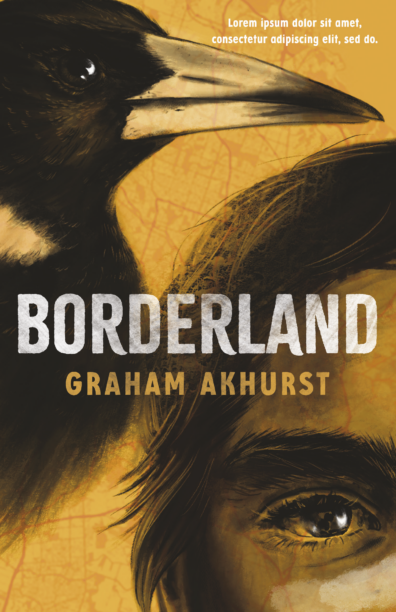
The hidden Chosen One trope is as old at least as Arthur, especially in the Young Adult realm, but Graham Akhurst gives it fresh poignancy in his debut novel by using the frame of the Stolen Generations and colonial displacement. In fact, the non-fantastical elements of Borderland are where the tale strikes deepest, the horror elements familiar and the narrative trajectory treading a well-worn path of discovery, mentorship and challenge.
Our hero is Jono, a First Nations lad raised in Brisbane with no knowledge of his mob or Country, his family’s past either not known or obscured by his loving single mum who is, one suspects, battling her own demons. In an echo of the acclaimed TV series Cleverman, Jono is embroiled in a journey of discovery that reveals far more than he could ever have expected about the world and his place in it.
The story opens with Jono feeling like the odd one out, he and his long-time friend, Jenny, graduating as the two Indigenous kids on a scholarship at a prestigious high school. That the discrimination comes not only from classmates either ignorant or jealous but also other blackfellas, who brand him a ‘coconut’, is telling. Hell, even magpies give him a rough time, even out of nesting season.
Aside from his mother, Jenny – attractive, talented and secure in her cultural identity – is Jono’s rock. It is at her instigation that Jono joins an arts academy, where the story picks up the pace. It is here that the pair find themselves on a flight to western Queensland to shoot a ‘documentary’ extolling the virtues of the mining industry to the traditional custodians whose land sits above rich seams of gas ripe for the fracking.
Akhurst looks back at life in Nudgee and forward to his next writing project
@ behind the stripes, 2021
For the boy from Brisbane, the tension of mining interests, economic drivers and preservation of Country is an intriguing backdrop to the simple fact that he is making serious money for the first time in his life – money that can help his mother. This mirrors the argument of trying to better the lot of traditional owners by allowing exploitation of Country, a contemporary conflict that gives the story added social weight. Further illustrating the clash, Akhurst appears to draw upon a decade-old, contentious accusation of methane released by coal seam gas operations setting the Condamine River alight in one of the book’s more evocative scenes.
It is out west that Akhurst finds his most vivid descriptions of landscape in a tale simply told, as befits its young first-person narrator who wields slang, not metaphors. And it is out west where truths are uncovered that will irrevocably change the lives of Jenny and Jono. There is the matter, for example, of Jono’s growing attraction to his confident, mature friend. And there’s the question about that dog-headed monster that’s been haunting him of late, the visions growing in potency despite the medication he has been prescribed. And what about that enigmatic ringer so at ease in the dust and haze of the west, and tales of Dreamtime spirits that may not be as quiescent as believed?
These spirits and other totemic and symbolic meanings are the creation of Akhurst, a Kokomini writer and academic who grew up in Meanjin (Brisbane). In a note, Akhurst, who includes a Fulbright scholarship among his accomplishments, reveals extensive consultation with First Nations people in relation to this story, but he makes the point that he carefully invented settings and cultural elements to avoid appropriation.
This incorporation of beliefs, however fictionalised, and Jono’s growing understanding of their meaning and their relationship to him, are key elements of this coming-of-age yarn that sets the scene for further volumes.
At story’s end, Jenny and Jono both have quests awaiting them that provide further opportunity for social exploration as well as good old-fashioned adventure. As such, Borderland is a solid start, both for our heroes’ journey and Akhurst’s fiction career.
Reviewed by: Jason Nahrung
Ballarat Writers Inc. Book Review Group
Advanced reading copy provided by the publisher