Tag: writing

Book review – The Writing Class, by Esther Campion

Title: The Writing Class
Author: Esther Campion
Publisher: Hachette Australia, 2024; RRP: $32.99
Review: Rhonda Cotsell, Ballarat Writers Inc. Book Review Group

The Writing Class is a work that succeeds at what its title suggests. It is predominantly light reading but with moving and believable depths. This is possibly because, as a retired librarian, I am convinced of the power of the written word and the act of writing to, if not transform lives, then at least make life significantly easier or less difficult to negotiate. So I was interested in how the author would approach it. Also, as someone with a Ballarat and Creswick writing group history, I was pretty much in just from reading its title.

Irish Australian author Esther Campion has a background which includes a deep respect for the author Maeve Binchy, membership of a Tasmanian writing group, and degrees from the University College Cork and the University of Aberdeen in Scotland. She also worked in adult education and has studied environmental science and zoology. The author has written three other novels and currently lives in Tasmania with family, her beloved chocolate labrador (or in her words, ‘labradorable’), a smoochy cat and several elderly horses.

The Writing Class covers writing from form filling to creative and autobiographical. Within that framework is an exploration of human relationships set within a range of familiar and current issues. Vivian, the class leader to be, is herself struggling to deal with a major life shock: after having accompanied her husband to Tasmania, she is abandoned by him. Her story is where The Writing Class begins, alone and humiliated and preparing reluctantly for an interview with a friend who is also the manager of the local library and who has received funding to establish a writing class.

Esther Campion interviewed about The Writing Class

@ Living Arts Canberra

Vivian has a significant teaching and writing background and it is through her eyes the narrative unfolds, but this soon changes as we are slowly introduced to the people her friend has cajoled or strongly encouraged into joining the class. Among these are people dealing with domestic violence, adult illiteracy, Long COVID, some for whom English is their second language, single parenthood, ageing and, scattered throughout, severe loss of confidence. Outside the writing class sessions, some also face forced labour, sexuality issues, and parenthood trials.

This book covers a lot of ground, creating convincing and engaging characters and managing to interweave all issues within the writing group setting in a matter-of-fact style, neither dramatising nor understating the emotional journeys of each of its characters. It fits the genre of popular literature, and kept me engaged. Particularly because the problems each character dealt with are familiar and current, ones we read about in the news, law reports or case studies.

Vivian is nervous about returning to teaching and not sure she is up to what the manager wants, and her anxiety, and how she organises each class, also plays an important role in the narrative. This is not done in a dry and instructional tone but through Vivian’s calculated strategies to develop students’ confidence as the class moves forward. We see the thinking beforehand, the application and the results. Since part of the task involves the completion of an anthology by the end of the course, a central part of her approach is also the building of a team, despite its being a motley group of people of different ages and histories who have never met before. Friendships form, initial negative reactions – fearful or distracted – are overcome between the walls of the classroom. This the author does expertly, in such a way as to make the reader feel part of the class itself.

I did have one quibble and that is towards the end where Vivian thinks, in relation to the group:

If the last few months had taught her anything, it was that life was better when you said yes.

Given the severity and complexity of the issues each individual member, including Vivian, brought to the class and had to deal with outside it, I found this a bit of a pink and fluffy simplification of what makes life better – overlaying what had been quite moving and informative, and cheapening it.

It also bypasses the fact that positive outcomes were inextricably linked to the high level of support and access to other resources of those within the group, and not just the fact that they said ‘yes’ to the new experience of being in a writing group.

I can hear howls of disapproval re the above as the book does not pretend to be a serious sociological analysis. However, every reader of a particular work is going to have a different response to it and, as one of its readers, I felt suddenly let down and not a little disappointed.

So, a mixed review. I definitely enjoyed it in the lead up to the conclusion, and could not put it down, wanting to know what would happen next with Vivian, how she ran the class, and what would unfold in the lives of her writing class members. It was an easy read and the author’s background in adult education was apparent in the sections where she designed the sessions, particularly where the intention was to create cohesion in the class to make the final step of completing an anthology. Most of all I enjoyed the class as individuals, each with their own particular personalities, life experiences, and approaches. The author created people here that I felt an emotional response to.

Potential readers? It fits the genre of general fiction, i.e., one that does not fit into a specific genre like romance or thriller; suitable for young and older adults. Those who like Australian settings would like it, and also those who like an easy and entertaining read which includes a believable background with relevant, current issues and recognisable characters.

Review copy provided by the publisher

It’s that time of the year again with the Pamela Miller Prize, our annual flash fiction competition.

The winner of the Pamela Miller Prize 2024 will receive a certificate and $100 first prize, as well as publication in the Ballarat Writers newsletter and website. The winner will be announced at the Ballarat Writers July members’ night. 

The Pamela Miller Prize first ran in 2015, in memory of Pamela Miller, who was a very active and productive member of Ballarat Writers. She was a writer of short stories and poetry, and won the short story competition with ‘Murder at MADE’ in 2014. Early in 2015, Pamela wrote a very popular poem called ‘Bronze Heads—The Prime Minister’s Walk’ as part of a Ballarat Writers project during the Begonia Festival.

Entries open: Saturday June 1

Entries close: Sunday June 30

Ballarat Writers is accepting fictional prose entries of up to 500 words on the theme Fire.

Entry is free. 

This is limited to members of Ballarat Writers, so make sure you’ve joined or renewed your membership!

All entries must:

  • be original and unpublished
  • be written by a current member of Ballarat Writers (judging committee members cannot enter)
  • engage with the theme Fire, and be 500 words in length or less (not including the title)
  • be sent to competitions@ballaratwriters.com with the subject line ‘2024 Pamela Miller Prize Entry’.

As the competition will be a blind judging, please do not include your name or contact details on the entry. 

You can read more about the Pamela Miller prize here.

Good luck and happy writing!

Book review — Murnane, by Emmett Stinson

Title: Contemporary Australian Writers – Murnane

Author: Emmett Stinson

Publisher: The Miegunyah Press/MUP, 2023; RRP: $30
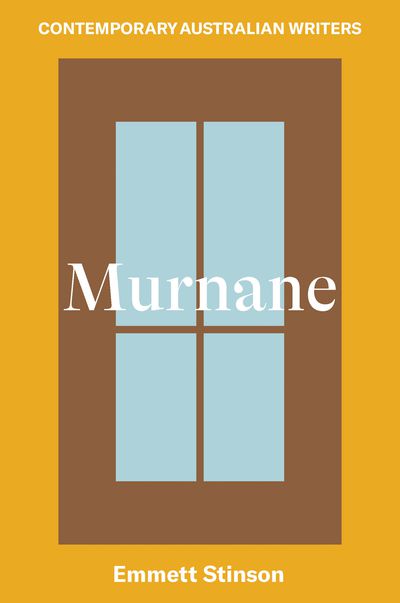
Emmett Stinson is a lecturer in Literary Cultures and Head of English at the University of Tasmania. A man of words, a literary academic, and a skilled professional with several career milestones, awards, and publications to his credit. 

Melbourne-born Gerald Murnane is regarded as a serious author of literary fiction, “highbrow material”, some suggest experimental, though in literary circles it is material that warrants deep and meaningful discussion.

Stinson gives us a solid and professional introduction to Murnane and his writing. Making it an excellent companion for anyone deciding to read the works of Murnane. Stinson’s book is informative, written in a way that makes it accessible to a broad range of readers.  There are frequent references to other literary critics and comparisons to other notable works and authors.  The proviso is, one needs to have read widely or at least be motivated to read more; there is a bibliography included.

Murnane is clearly an interesting character, eccentric, and prolific. His writing is…well, in Stinson’s words, “Murnane’s writing hybridises fiction, essay and memoir in ways that anticipate contemporary autofiction.” Stinson’s unpacking of Murnane’s themes and style is a worthwhile guide to Murnane’s works.

It seems Murnane finds literary criticism unsatisfactory, in some ways distasteful.  His relationship to the literary academic world of Stinson could be described as challenging and is sufficiently interesting for Stinson to incorporate this aspect of Murnane into his book. Including an amusing anecdote of Murnane serving behind the bar at the Goroke Golf Club during a literary conference held at the club to discuss the works of Gerald Murnane.  

Emmett Stinson delves into the writing of Gerald Murnane in this extract

@ the guardian

The book begins with an introductory chapter on Murnane the author. I found this to be the most interesting part of the book, giving context and life to an author and their work. I was immediately intrigued and went out to find copies of Murnane’s work; I had not previously heard of Murnane.

There are separate chapters dealing with four of Murnane’s major “late fictions”. These chapters are followed by a conclusion discussing Murnane’s style. The last chapter looks at the late recognition of Murnane’s writing by the literary world, at least the Australian part of the world, noting the attitudes of various critics, and providing insights from an interview with Murnane.

Stinson admits to being a Murnane devotee. However, I felt he was objective in portraying Murnane’s work.  This book is one for the anyone interested in writing as a creative form of expression.

Reviewed by: Frank Thompson

Ballarat Writers Inc. Book Review Group

Review copy provided by the publisher
The 2023 Pamela Miller Prize

It’s that time of the year again with the Pamela Miller Prize, our annual flash fiction competition.

The winner of the Pamela Miller Prize will receive a certificate and $100 first prize, as well as publication in the Ballarat Writers newsletter and website. The winner will be announced at the Ballarat Writers July members’ night. 

The Pamela Miller Prize first ran in 2015, in memory of Pamela Miller, who was a very active and productive member of Ballarat Writers. She was a writer of short stories and poetry, and won the short story competition with ‘Murder at MADE’ in 2014. Early in 2015, Pamela wrote a very popular poem called ‘Bronze Heads—The Prime Minister’s Walk’ as part of a Ballarat Writers project during the Begonia Festival.

Entries open: Monday 1 May

Entries close: Wednesday 31 May

Ballarat Writers is accepting fictional prose entries of up to 450 words on the theme Smile. Entry is free. 

This is limited to members of Ballarat Writers, so make sure you’ve joined or renewed your membership!

All entries must:

  • be original and unpublished
  • be written by a current member of Ballarat Writers (judging committee members cannot enter)
  • engage with the theme Smile, and be 450 words in length or less (not including the title)
  • be sent to competitions@ballaratwriters.com with the subject line ‘2023 Pamela Miller Prize Entry’.

As the competition will be a blind judging, please do not include your name or contact details on the entry. 

You can read more about the Pamela Miller prize here.

Good luck and happy writing!

Book review – The Writer Laid Bare, by Lee Kofman

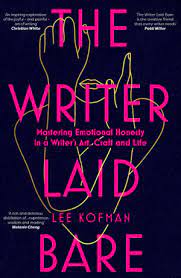
Title: The Writer Laid Bare: Emotional Honesty in a Writer’s Art, Craft and Life

Author: Lee Kofman

Publisher: Ventura Press, April 2022; RRP: $32.99

Lee Kofman holds a PhD in social sciences and a MA in creative writing. Lee, who lives in Melbourne, is a writer, mentor, editor and teacher. She identifies as a Russian-born Israeli-Australian writer and has written three fiction books and two memoirs. Lee has also co-edited works and written short pieces that have been published in Australia as well as the US, Scotland, UK, Canada and Israel.

Lee Kofman doesn’t do things by halves. In The Writer Laid Bare, she tackles the big and complicated issues of writing in a way that only an experienced and brave writer can. This book, written in her third language, English, covers themes that most writers at some time or other struggle with. The notion of ‘mastering emotional honesty in writing is explored in a depth that makes the book unique.

‘Nonesty’ is a term developed and used by the author to describe a writing process that isn’t honest, integrated or in touch with the complexities of the subject. ‘Artistic writing begins with self-awareness of, and honesty about our psychological landscape — all those messy emotions, thoughts and memories that make us who we are.’

Lee Kofman reads from The Writer Laid Bare

@ writing western sydney: the readings

Further to the above, Lee introduces tenets for the writer in regard to finding their subject. They are: ‘write about what is urgent’, ‘just wait’, ‘write what you need to understand’, and write ‘what makes you blush’. These are challenging and confronting notions for any writer to negotiate but steer us toward the honesty that, I believe, Lee knows so well and is the prelude to writers moving towards an accomplished and satisfying level of writing.

Covering topics in an in-depth manner, this book is structured into four parts, exploring psychological, personal, practical, and external factors that influence a writer’s life. It’s easy to read and relevant to writers whether emerging or established. The author shares and exposes her own experiences with great generosity, which allows a level of authenticity seldom seen in books on the topic of writing. Alongside the personal disclosures are the well-researched inclusions from a wide-ranging field of experts.

This book is a journey into the mind of a writer who has spent time understanding and then understanding again the enormous complexities of writing fiction or non-fiction and how the use of self and self-awareness impacts on all aspects of our writing.

The Writer Laid Bare is a wonderful contribution to writers and the writing sector in Australia and beyond.

Reviewed by: Heather Whitford Roche

Ballarat Writers book Review Group, May 2022

Review copy provided by the publisher

Book review – The Luminous Solution, by Charlotte Wood

Title: The Luminous Solution: creativity, resilience and the inner life

Author: Charlotte Wood

Publisher: Allen & Unwin, 2021; RRP: $32.99

Charlotte Wood is an established Australian writer of fiction and non-fiction who counts the Stella Prize and the Prime Minister’s Literary Award for Fiction amongst her accolades.

The author had earlier conducted a series of in-depth interviews with writers exploring the creative process, which she later published in her highly successful book The Writer’s Room. She also explores the writing process in her podcast The Writers’ Room. Much of what she discovers from these conversations and her own practice is contained and developed further in The Luminous Solution.

The phrase ‘luminous solution’ is how the author describes that experience when a writer hits a wall with a new work and, despite all their efforts, is unable to progress, but then, inexplicably, a resolution presents itself, often involving a radical rethink of the entire work.

She gives as an example her own struggle with The Weekend, which she  ‘initially envisaged (as) a wry celebration of domestic realism’ based on the friendship of three old friends, but hit a  creative dead end, putting it aside in despair for several months.

A ‘decrepit, geriatric dog’ belonging to one of the three friends, however, kept haunting her and one day, months later, she suddenly realised its dereliction and confusion represented less comfortable, hidden aspects of the women themselves and their relationship. This was Charlotte Wood’s own ‘luminous solution’.

In the process of pinning down how this sudden illumination worked and how it could arise,  the author found other creatives – not just writers – experienced this sudden resolution and also discovered that the experience and the nurturing of it could be found in certain patterns of behaviour and background that creative people shared. 

Throughout the book she constantly references the work and practices disclosed in comments by other creatives, both Australian and international. In the process she discovers practices that were repeated, including some she realised she did herself but had not really thought about. These practices formed the foundation for and fed these sudden, inexplicable breakthroughs that often broke the practitioners’ previous approaches and/or the norms of what they were trying to achieve.

Listen to Charlotte Wood on her writing practice

at the garrett, 2019

The Luminous Solution is a freewheeling ride through a wide range of topics – writing tribes, the use of anger, humour, nature, teachers, dreams, identifying what was missing, sharing work, art,  therapeutic reading, feral writing, spirituality and religion, writing the un-writable and more – synthesising all parts into a coherent whole.

Each creative practice is developed in separate chapters. They are disparate: some internal states, some a particular environment, some ordered and routine, some involving spontaneity and letting go. But combined they lay the groundwork, fertilising the creative mind and making it possible for the sudden leaps that carry both creator and creation forward, whether it be a painting or a piece of writing.

The writing style is very close and immediate and captures a sense of a mind probing deep inside to voice something that by its very nature cannot be pinned down or reduced to a series of steps.  Capturing – naming – the ineffable. The writing voice is reflective and what could easily have been something fuzzy and disconnected comes together with a precision and immediacy that brings all separate, sometimes opposing, elements together into a coherent whole.

The Luminous Solution will appeal to those who create as well as those who simply love reading and literature and who wonder sometimes how writers come up with the scenarios, characters and outcomes that they do. Serious students of literature and those who study the practice of writing also would benefit. There is also a psychological aspect to it in her references to dreams, creativity and the subconscious that would appeal to those who are interested in a more  scientific or academic approach to the workings of the human imagination.

Reviewed by: Rhonda Cotsell

Ballarat Writers Inc. Book Review Group

Review copy provided by the publisher
February Words Out Loud

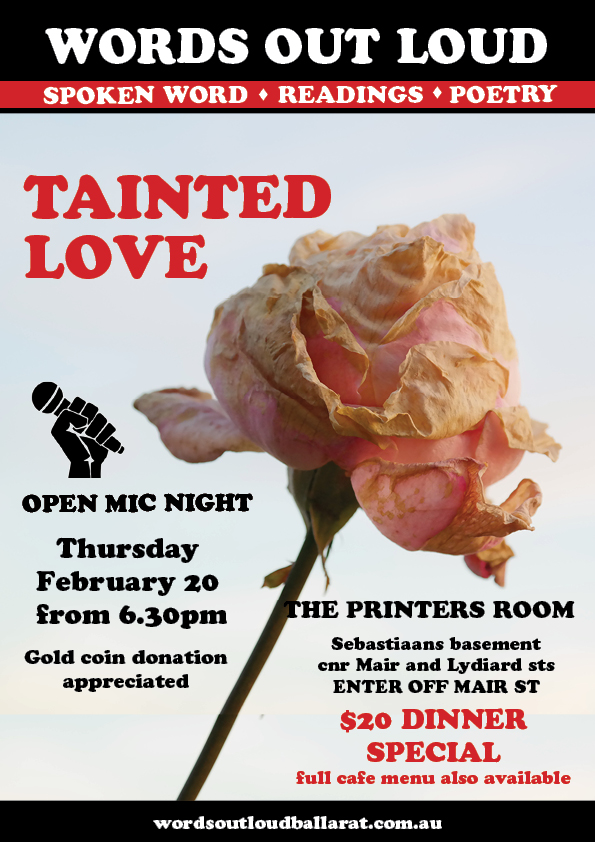
February WOL flyer

February’s theme at Words Out Loud is “Tainted Love”. Wordsmiths are invited to explore the theme or simply ignore it altogether.
This is a great opportunity to road test new material, celebrate a success or share some inspiration, or simply enjoy a diverse range of spoken word — poetry, prose or storytelling; read or recited; your own work or someone else’s.

Date: Thursday February 20

Time: Doors open about 6.30pm, words from 7pm

Continue reading

Kirstyn McDermott on Critique Groups and Workshopping

Kirstyn McDermott hosts Words Out Loud at the Printers Room monthly, teaches at Federation University, has been writing for upwards of 15 years and attends a Melbourne critique group meeting once a month. She’s a regular presence at our members’ nights, and was kind enough to share her experience and expertise this May.

She opened by saying that writers are not sole geniuses and they do not work alone. She shared a quote from Terry Tempest Williams — “I write in a solitude born out of community.”

Continue reading

© 2026 Ballarat Writers

Theme by Anders NorenUp ↑